Delivery of a Top Roping Outing
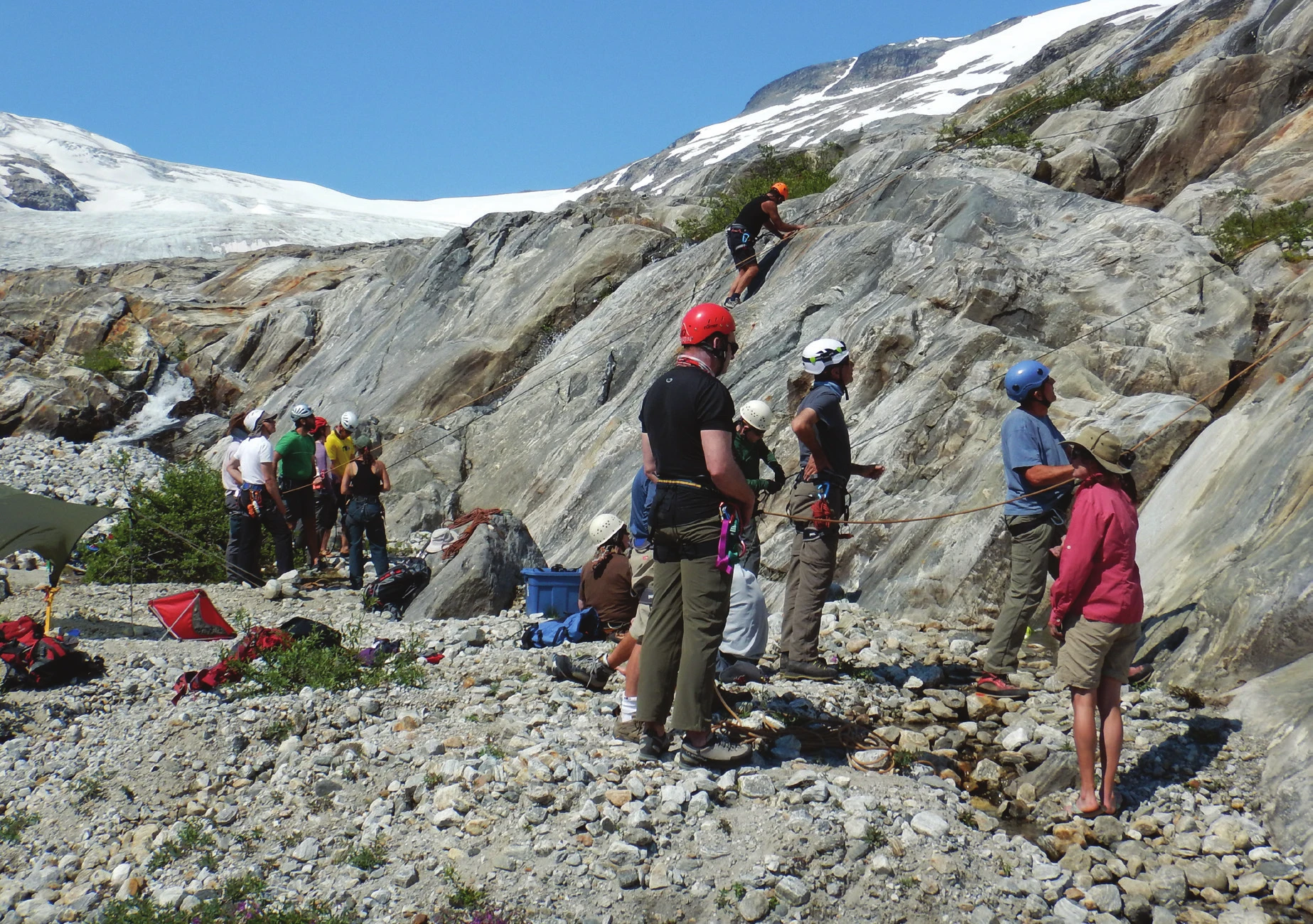
A successful top roping outing requires thoughtful management of the group, diligent management of potential risks, and administration of crucial documents such as waivers and acknowledgement of risk forms. In this chapter we will explore the ACC waiver administration process, the basic principles of group management, and the cornerstones of risk management in a top rope climbing context.
Waiver Administration
In accordance with ACC policies, all participants must complete a waiver prior to participating in an outing. The importance of this document to The Alpine Club of Canada cannot be over-emphasized. The conduct of the top rope leader when administering the waiver to the participants is of paramount importance, as the administration of the waiver by the leader can affect its legal standing.
The role of the waiver is to protect The Alpine Club of Canada and outing participants against lawsuits in the event that a participant is injured or killed. It also protects the Alpine Club of Canada if a participant has any of their property or personal belongings damaged or lost. The document further protects The Alpine Club of Canada from liability for natural hazards as well as the possible negligence of any of the other Alpine Club of Canada member participants.
Preferred Waiver Delivery Practices
- Send waivers ahead of time to allow time for review;
- Ensure clear communication when delivering the waiver;
- Allow participants adequate time to read the waiver and provide them with the opportunity to ask questions;
- Ensure that participants are aware of the specific and general risks associated with the activity prior to administering the waiver;
- Have participants acknowledge verbally that they have read and understood the waiver;
- Ensure waivers are completed in full and are unaltered;
- Waivers should be administered and witnessed by the top rope leader;
- Waivers should be presented in a standardized format; and
- Ideally completed and signed in blue or black ink.
Other Waiver Delivery Considerations
- Waivers do not guarantee protection from law suits;
- Waivers do not absolve leaders from acting professionally;
- Waivers are often delivered annually to reiterate risks and ensure participants are accepting of them;
- Waivers are legal documents and cannot be altered in any way;
- Waivers do not expire; and
- If the activity or risks change, a new waiver should be administered.
Completed Waivers
Signed waivers must be retained by the ACC for a period of seven years, after which time they can be destroyed.
For the current forms, the participant status checks that go with them, and how waivers interact with the Minors Policy, see Waivers and Hazards.
Principles of Group Management
A well managed group will be more likely to achieve the trip objectives, will foster a more cohesive group dynamic capable of resolving interpersonal conflicts, and will be better equipped to address and mitigate any risks associated with the outing. Participants in an effectively managed group will be aware of their responsibilities, will operate under the coordination and guidance of the leader, and will be educated and equipped for the day's activities.
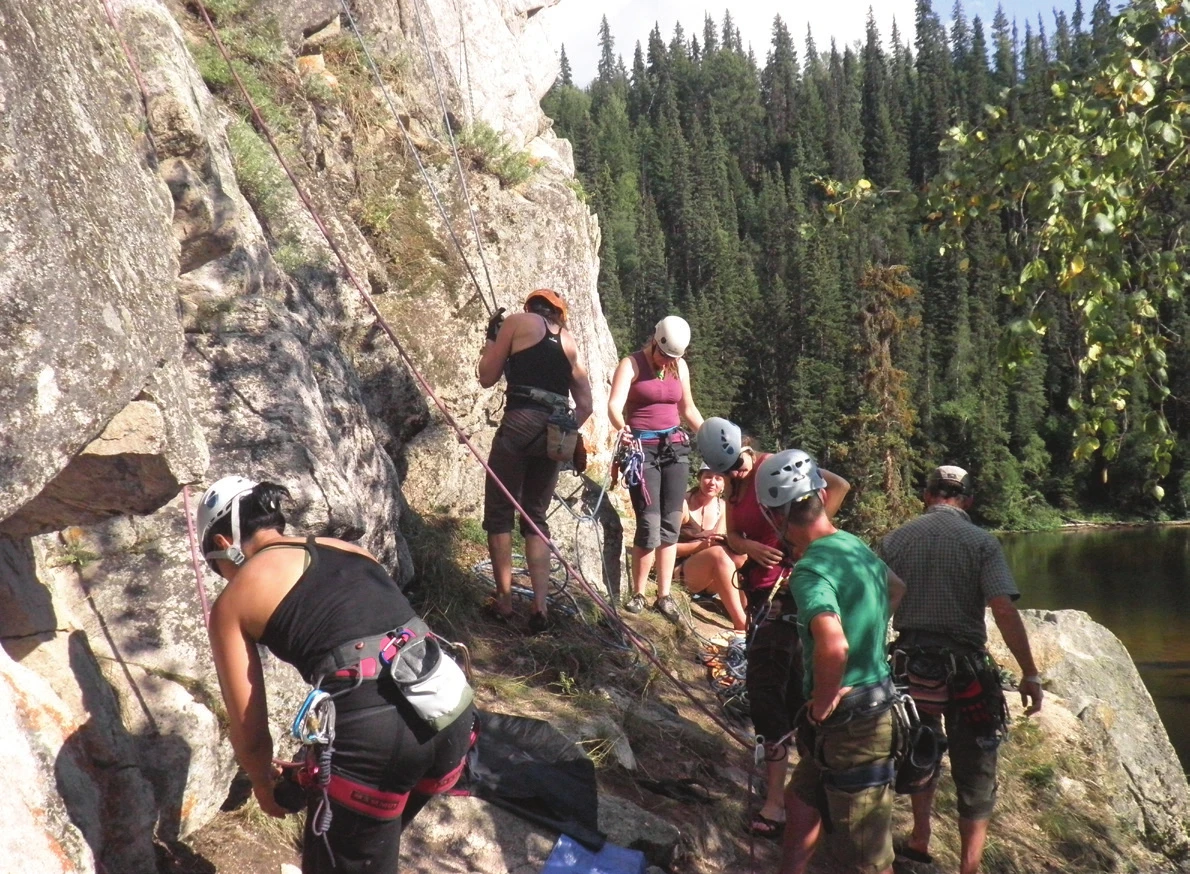
Successful leaders diligently and deliberately set the tone for the outing early in the trip. This is often achieved through an initial face to face group briefing at the start of the day where the leader introduces themselves, explains the goals for the day, outlines their expectations of participants, and facilitates the opportunity for participants to introduce themselves to one another and the group.
Expectations
Providing participants with clear expectations both before and during the top roping outing, will enable them to better manage their personal safety and achieve trip objectives. Common expectations may include:
- Group travel expectations
- pace and spacing;
- scheduled breaks for water/clothing changes, etc.; and
- staying on trails.
- Site expectations
- safe zones (helmets, proximity to edges or other natural hazards);
- personal belonging storage (backpacks closed, gear and personal belongings are in a contained space and off of trails); and
- litter and human waste (pack out what you pack in).
- Activity expectations
- participant positioning;
- belay stances;
- climber responsibilities;
- equipment use expectations; and
- leader involvement expectations.
Leadership
High quality leadership and timely motivation by the leader helps ensure that participants act according to the expectations that have been set. Further, supervision enables the leader to identify risks and address them before accidents occur, and to closely monitor the group's well-being throughout the outing. Depending on the outing objectives and participant experience, preferred supervision practices may include:
- Keeping the group's proximity close to allow for continued visual supervision and verbal communication;
- Checking participant technical systems such as the knot and set-up of the belay device before the system is used;
- Continual monitoring of participant nutritional/caloric intake and hydration;
- Monitoring the group for signs of fatigue or distress; and
- Monitoring the group dynamics to ensure continued participant motivation and enjoyment.
Education
A significant component of group management involves ensuring that participants are educated and empowered to complete the day's activities under the guidance of the leader. In order for this to occur, leaders are often required to provide guidance and instructional inputs throughout the day. Typical instructional inputs may include topics specific to ethics, ecology, risk management, technical systems, local history, personal experience and insight, etc.
Guidance
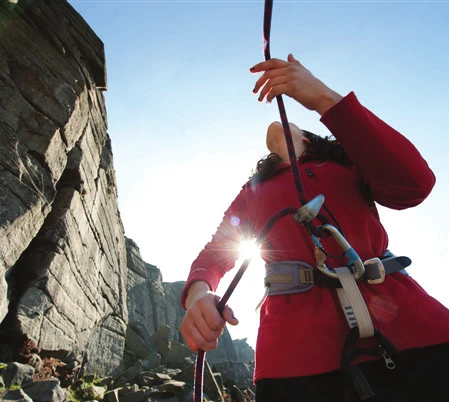
In addition to educating participants, the success of a top roping outing also requires diligent guidance on the part of the top rope leader. Guidance differs from educating participants in the sense that it motivates and enables participants to develop independent competency with specific skills. Well-guided participants will feel empowered to make their own decisions and manage their personal safety with the understanding that the top rope leader is available to provide support and assistance where required. Qualities of a strong leader capable of providing sound guidance include:
- Situationally aware of risks and safety concerns;
- Enthusiastic, supportive, and motivational;
- Knowledgeable and capable of articulately sharing their knowledge;
- Technically proficient in their systems applications;
- Physically fit and able to complete the day's activities and climbs;
- Sympathetic to the needs of the group; and
- Capable of resolving conflict and providing direct leadership if required.
Conflict Resolution
Inevitably occasional conflicts will arise within a group or between participants and leaders. Therefore, top rope leaders need to be prepared and adept at resolving minor conflicts. Basic strategies for resolving conflicts include:
- Being assertive and recognizing the conflict;
- Addressing the conflict privately if possible rather than in front of the group;
- Remaining calm and dedicated to resolving the conflict rather than winning an argument;
- Acknowledging the feelings of all parties involved in the conflict and seeking further clarification specific to the issues at hand if required;
- Determining potential resolutions to the conflict;
- Selecting an appropriate resolution and seeking support from those involved in the conflict; and
- Proceeding with the resolution.
Effective leaders recognize conflict building, and tactfully and firmly address it before it escalates.
Risk Management
A top roping outing may present a variety of risks throughout the day. It is the responsibility of a top rope leader to recognize the risks, quantify them, and appropriately mitigate them to decrease the likelihood of an accident or injury occurring. In this chapter we will explore several crucial risk management components including situational awareness, hazard recognition and mitigation, as well as the concept of participant demonstrated competency.
Situational Awareness
Situational awareness refers to the top rope leader's ability to recognize and mitigate hazards before they present a risk to the group. It is the responsibility of the top rope leader to step back and evaluate all of the variables in a given situation, determine their interactions, and evaluate the potential for this to present a risk to the group. Situational awareness is closely tied to experience, more experienced leaders tend to more readily recognize the events occurring around them and be better equipped to recognize potential risks.
In the context of a top rope outing, situational awareness is the ability to recognize environmental, interpersonal, internal human factors, external human factors (other climbers and day users), and the relationship that these factors have on one another as well as any impacts this will have on the safety and success of the outing.
Hazard Recognition
Closely linked to situational awareness is the top rope leader's ability to recognize hazards, and determine their probability and severity. Climbing is an inherently dangerous activity and therefore has some level of risk associated with it. The top rope leader's role is not to entirely eliminate the risks associated with the activity, but rather to recognize them and ensure that they are well managed, mitigated, or avoided. Common hazards for a top rope leader to recognize include:
- Environmental
- very warm temperatures (heat exhaustion, heat stroke, sun burn, dehydration);
- very cool temperatures (hypothermia, loss of dexterity, lack of focus);
- overnight freeze and daytime warming cycles (natural rock fall);
- high wind (increased rock fall, challenging communication, dehydration);
- precipitation (increased rock fall, slippery conditions, hypothermia);
- lightning (electrocution); and
- animal encounters (animal attacks, disease transmission, anaphylaxis, rock fall generated by wildlife above the route).
- Interpersonal Risks:
- conflict (disagreements or altercations); and
- group not following or listening to the leader.
- Internal human factors:
- intrinsic motivation (students not following directions of the leader or students pushing the leader to take risks that are out of context with the trip objectives);
- food, hydration, sleep, symptoms of drugs or alcohol;
- risk tolerance;
- fear; and
- trust.
- External human factors:
- other users and groups (crowding, interruptions to the day's program, dogs).
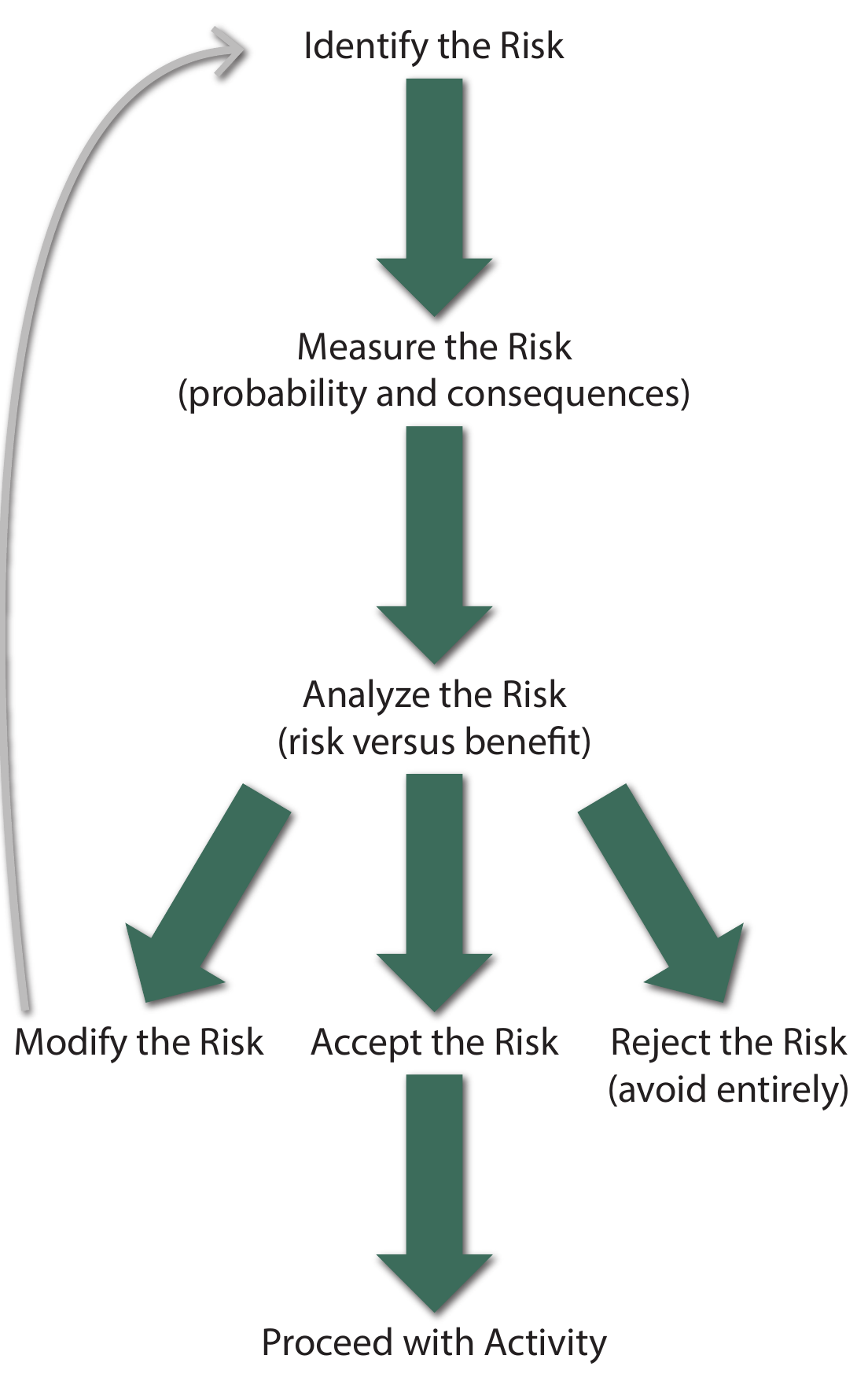
Once hazards are recognized, they move through a cycle of measurement, analysis, and a decision about how to respond:
Hazard Mitigation
Once hazards have been identified, their probability assessed, and their severity analyzed, the top rope leader must determine an appropriate mitigation strategy. In some instances, this may involve avoiding the hazard entirely or modifying the situation to decrease the probability or severity of the hazard, or it may involve acceptance of the hazard and continuing forward. Examples of common hazard mitigation strategies in a top roping climbing context include:
- Wearing helmets anytime there is an overhead or fall hazard;
- Employing instructor systems checks prior to participants commencing a climb;
- Ensuring periodic breaks occur throughout the day to eat, drink, and adjust clothing;
- Continually monitoring the weather to allow for adjustment of the program prior to weather changes;
- Recognizing group conflict and quickly addressing it; and
- Recognizing participant distress and addressing it.
Participant Demonstrated Competency
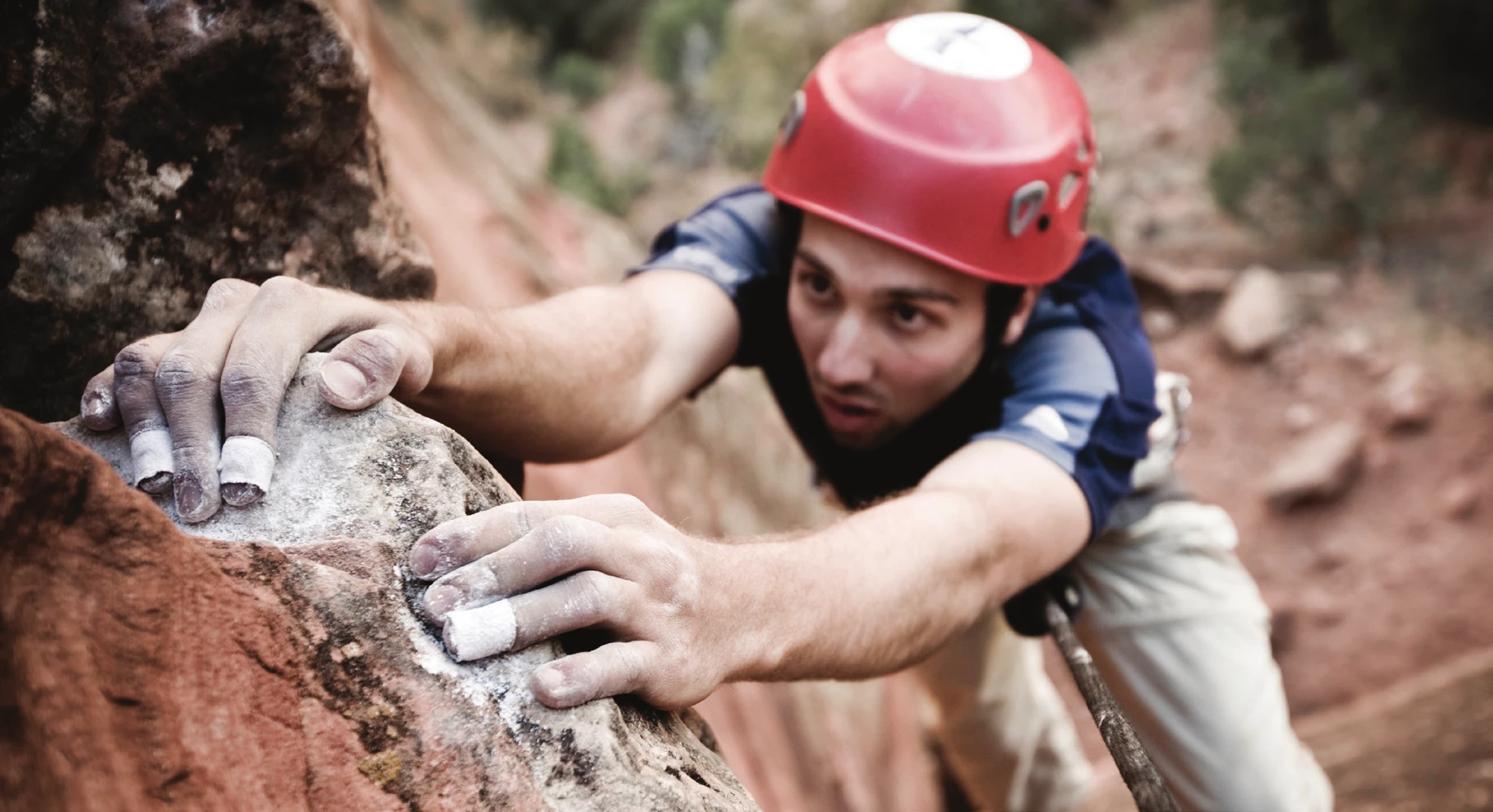
The ability to assess the demonstrated competency of a participant is a vital component of a top rope leader's hazard recognition and hazard mitigation strategy. Prior to giving participants risk related responsibilities, such as belaying, it is important that participants demonstrate competency with the skills necessary to do so. Until participants have demonstrated adequate competence, it is imperative that the top rope leader manage risk on their behalf. Common techniques used to support participant competence with specific skills include:
- Providing participants with the opportunity to practice skills in a risk-free context;
- Visually monitoring participants to ensure skills are being practiced and applied correctly;
- Verbally testing participants to gain an understanding of their comprehension of the skill;
- Applying the skill progressively or incrementally;
- Providing the participants with constructive feedback and coaching if they are struggling with a skill;
- Physically supporting the participant's application of the skill in instances where it will increase comfort, safety, or success; and
- Monitoring the participant to ensure the application of the skill remains consistent over time and complacency and regression do not occur.
Ideally participants would demonstrate competency all the time, however, that is not a realistic expectation and often participants will need ongoing coaching, and/or instruction before they achieve independence with specific skills. For this reason, top rope leaders will need to exercise good judgement and limit the level of responsibility offered to those who are unable to demonstrate competency with a skill. This ensures the level of risk presented to the participants remains consistent with the nature of the outing and the trip objectives.